

I’ve got beef. So does Wonder.
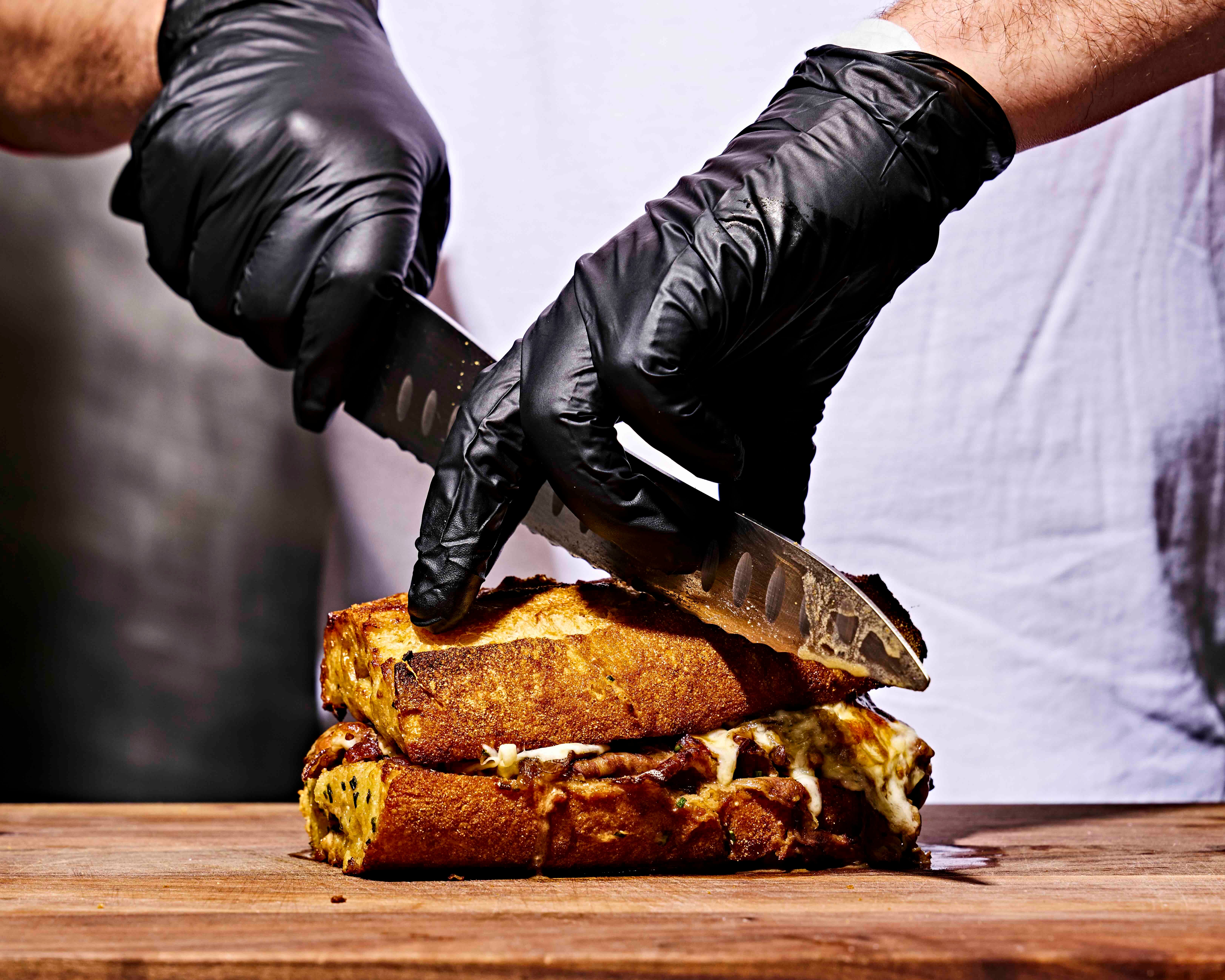
Six months after buying single-location fried chicken concept Blue Ribbon Fried Chicken, the ghost kitchen / food hall / fast food / delivery / meal kit company last valued at $9 billion bought another NYC restaurant. It’s acquiring New York City’s Salt Hanks, a wildly popular single-location sandwich shop with a viral french dip sandwich. The sandwich will be available at some Wonder locations beginning this fall.
“The sandwich that’s always been worth the wait is about to become a lot easier to get,” a company release declared.
That’s true. But I’m hung up on the rest of the language Wonder used in the announcement, which — unlike the Blue Ribbon announcement or subsequent coverage of Wonder’s acquisition of an eight-unit barbecue chain — doesn’t contain the word “acquired,” “bought,” or even “purchased.” Instead, the company softens the language: “Salt Hank’s joins Wonder,” it says. “The partnership is built on a shared belief that exceptional restaurants shouldn’t have to sacrifice what makes them special in order to reach more people.”
ETA: The word “acquisition” does appear in the official release, but not in a shortened version that was emailed to me yesterday. I don’t remember seeing it then, but it’s also been a real challenge of a week. Regardless, it’s in there now, and if I did miss it, I regret the oversight.
This is true, too! But it understates what’s actually happening. The restaurant, its branding, its menu, its recipes (Wonder calls this IP) have been sold. Chef Daniel Rubenfeld will join Wonder, while co-founder Henry Laporte — Hank — will “partner closely.”
(I asked a Wonder rep to clarify the announcement, and they confirmed it is an acquisition — Eater’s Nadia Chauduhury got it right in her Thursday coverage shortly after the announcement.)
Wonder has a lot of irons in the fire — it owns a meal kit service and a third-party delivery company; it’s expanding locations fast in the Northeast and in Texas, where it’ll soon start delivering by airborne drone. It’s teased a kind of build-your-own restaurant concept for influencers (or anyone that wants to spin up their own AI-generated restaurant concept in a couple minutes) — the robot it bought from Sweetgreen will help assemble the meals. It is, to put it lightly, a moonshot with a lot — a lot — of money behind it.
So what does it want with a single-location sandwich spot? Scale.
“Customers can expect the same iconic French Dip — made with dry-aged prime rib, caramelized onions, melted provolone, horseradish aioli, rich hot au jus and served on a French demi baguette — but without the long lines,” Wonder promises.
In an interview with People (what?) which also avoided words like “acquired” or “bought,” Laporte explained that he trusted Wonder to scale the concept appropriately. “...they don’t wanna f--- up the sandwich,” he said.
I’ve done a lot of reporting on this company, including talking to chefs with notable brands that have worked with Wonder. Some of those deals were partnerships; chefs reported receiving favorable deals that allowed them to walk away at any time. Not all have stayed on, but at the time of our interviews, all of them spoke highly of the company, its leadership, and its commitment to scaling while maintaining food quality.
Still, I’m not convinced that even the most meticulous reconstruction of an iconic, viral sandwich can replicate the original. Will it taste as good if you don’t have to fight as hard to get it? What happens to the magic of an indie business when its essence (and IP!) is taken over by a highly capitalized corporation? We’ll see, I guess. But I hope everyone feels like they got a great deal.
“I’m happy to be able to finally answer those DMs that are like, ‘Why the f--- can’t I get this sandwich!’” Laporte told People. “And now I’ll be like, ‘You can!’ You know, to a certain degree.”
OpenTable is putting influencer videos inside restaurant listings.
OpenTable is adding influencer videos to listings across the country in partnership with a SF-based startup called Seekeasy, an analytics company that pairs restaurants and digital creators. (It calls itself “the demand intelligence layer for the food industry.”)
Influence is hard to prove, but diners do care about social media aesthetics. According to OpenTable’s 2026 dining trends report, well over half of diners age 60 and under (including 79 percent of millennials) said a restaurant’s “Instagram/TikTok worthiness” is important when making a decision about where to dine.
“Creators bring the restaurant experience to life,” Seekeasy CEO Erick Hachenburg told me. “Diners can now quickly use their relatable stories to make decisions and enjoy the experience themselves.”
Diners are more open to AI now, according to a survey from PAR Technology, a point of sale company.
In PAR’s survey of 1,000 customers last year, 41 percent said they would choose a restaurant with no AI over a restaurant that uses AI in any form. This year? Just 27 percent said the same thing, signaling that 3 in 4 diners don’t mind when a restaurant uses the tech. Progress?

ICYMI:
OpenTable + Square (again)

Square and OpenTable are taking on the competition with a new digital guest profile that combines a diner’s reservation history, dining preferences and transaction data. Together, the companies say …
"You know, to a certain degree.” doesn't sound foreboding or weird at all...