

Can any company really take on the entrenched behemoths of Big Delivery? Olo, a pioneering digital ordering company with a restaurant customer list 800 brands strong, is going to try.
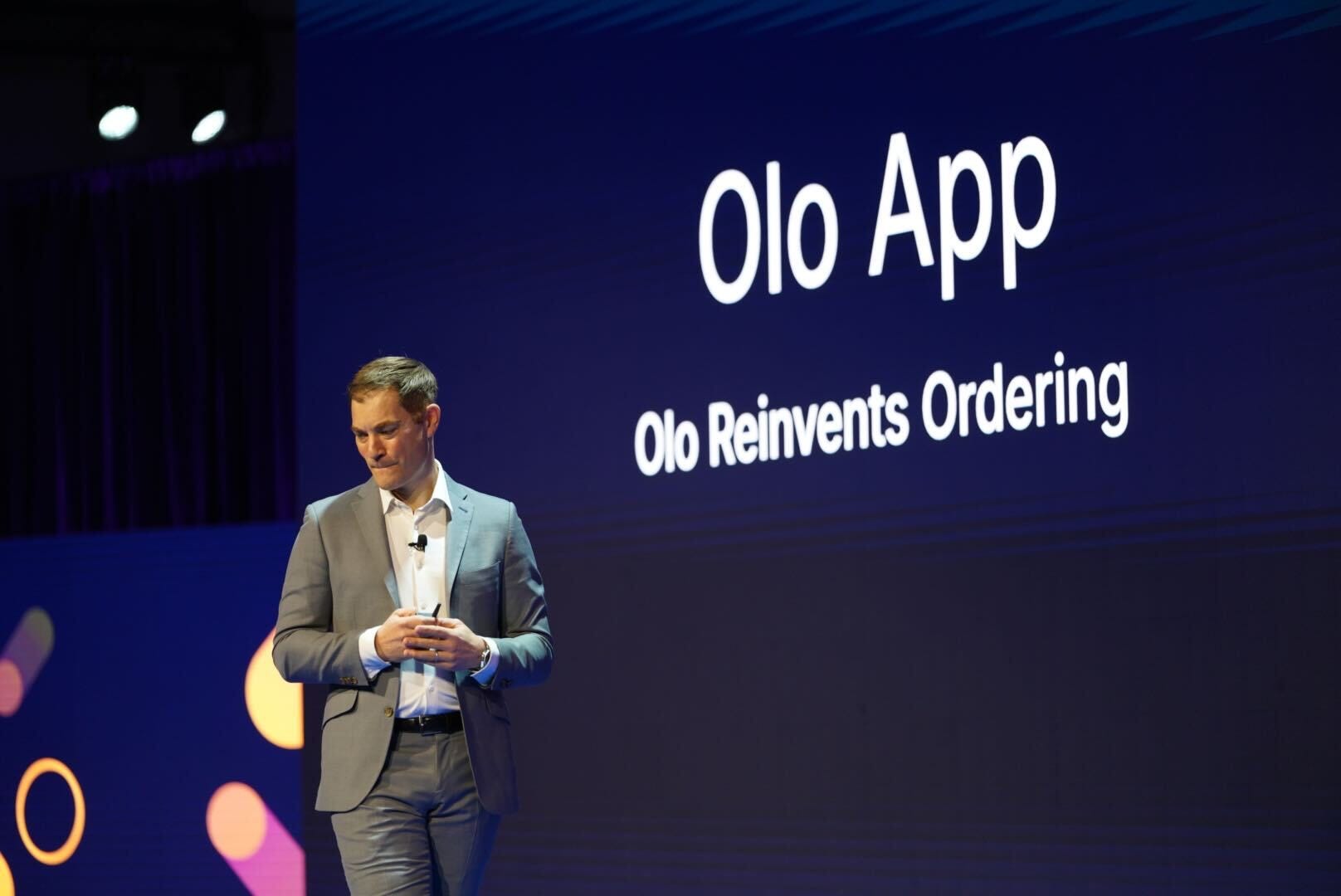
On Tuesday, Olo founder and CEO Noah Glass announced a consumer-facing, “second-party” ordering app that’ll launch later this year. The app ties together much of the info the company has on restaurants and their customers hitting third party delivery’s weak spots and leveraging Olo’s strong relationships with the largest chain restaurants in America.
The app, which Glass says is “just the beginning” of a new digital ecosystem that pulls the best features from first- and third-party ordering models while ditching the downsides, aggregates Olo’s restaurant customers, similar to other marketplace apps. Diners are encouraged to follow brands (examples from the announcement included Culver’s, Waffle House, and Carl’s Jr.) and place orders for pickup and delivery inside the app.
“For two decades, Olo has been quietly powering the digital infrastructure behind many of America’s favorite restaurant brands,” Glass told me over email. “With the Olo app, we’re surfacing that same trusted infrastructure to guests in a way that benefits both sides of the equation, delivering on our mission of hospitality at scale.”
(Actually, Glass wrote, “delivering on our mission of Hospitality at Scale™️” [emphasis mine] which is how I learned that Olo trademarked that phrase last year, around the same time it was acquired by private equity firm Thoma Bravo and delisted from the New York Stock Exchange.)
Olo’s forthcoming app is a distinctly consumer-facing offering from a company that’s spent over two decades working to stay (mostly) invisible. Olo is a software-as-a-service platform providing digital ordering, payment, and guest engagement tools. It’s one of those restaurant tech companies that works best when the diner doesn’t notice it. But in recent years it’s slowly stepped into the consumer spotlight. This app is a big leap forward.
“Expanding from a pure B2B company to offering guest-facing solutions is a natural evolution, and we’re not starting from zero,” Glass said.
Instead, it’s tapping an existing customer network of 40 million diners who’ve already signed up to save login and payment information (plus other info, like allergies or other dietary preferences) for use across Olo’s network of restaurants. That lets customers check out with one tap inside Olo’s new app, a convenience play that the company says boots business; restaurants experience a 7.5 percent increase in checkout conversion — that means the person actually buys the food versus abandoning their cart — when guests use a saved account instead of manually entering a credit card, or even just typing a username and password.
Olo’s newest promise to restaurants is even stronger. They won’t pay commissions for orders placed inside the app (this is the biggest complaint restaurants have about larger third-party services like DoorDash) and they’ll also receive valuable customer info like names and delivery addresses from customers. Olo’s ‘follow’ feature will juice that data since restaurants can see who chooses to follow them.
From the stage at Olo’s annual Beyond4 event in Arizona and speaking to a room full of restaurant customers, Glass called this, “One-click customer acquisition.”