


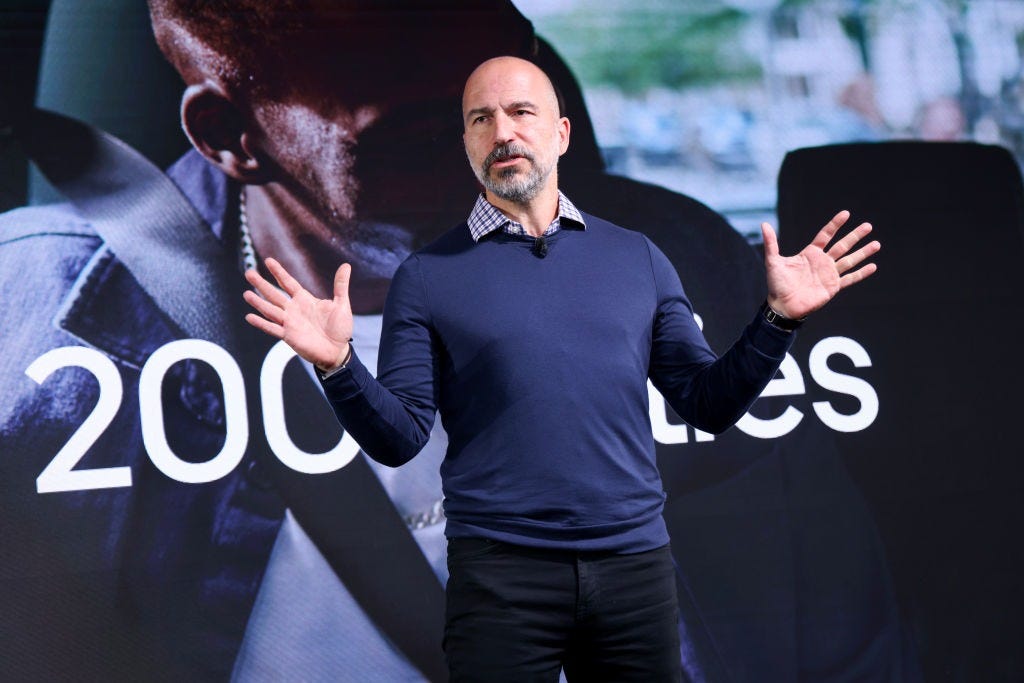
This week started with a big announcement from OpenTable: It’s launching a strategic partnership with Uber in the US and abroad. The announcement is light on details but heavy on buzzwords. Restaurants will be “easier than ever” to find and book, Uber CEO Dara Khosrowshahi said in a statement. And together, the companies are “redefining” dining out, per OpenTable CEO Debby Soo.
The partnership will roll out in phases this year. Both companies say they’re committed to expanding features and deepening the integration over time, pointing to a long-term tie-up. But… what features? And what integration?
I asked OpenTable CEO Debby Soo for some — any! — insight to help contextualize a Very Corporate Announcement, and got a predictably benign response:
“We’re constantly thinking of ways to make the experience of dining easier and better for both our restaurant partners and the diners who sit at their tables. And this partnership is really a win-win for both groups. It has a ton of potential -- a tighter tech ecosystem for restaurants, app integrations for bookings, benefits and rewards for OpenTable VIPs and Uber One subscribers and so much more,” Soo wrote me in an email.
In online posts, Khosrowshahi and other Uber execs have hinted at a few options, too.
Most are predictable enough, especially since Uber and OpenTable have linked up in the past. OpenTable was an early partner when Uber opened its API over a decade ago. Then, under founder and CEO Travis Kalanick, Uber was looking to expand its reach as quickly as possible. Now, based on (limited) statements, it’s hoping to increase value for its most dedicated customers.
Additionally, OpenTable once added a delivery option for some restaurants on its platform, a feature it added, presciently, before the pandemic. The messaging was the same then as it is now: the modern restaurant experience involves dining out with a reservation and dining in at home with plenty of delivery options.
So what will this year’s Uber-OpenTable link-up look like? Let’s speculate!
Restaurant reservations inside Uber’s app?
This is the most obvious potential feature. Uber has leaned hard into local discovery, encouraging its users to create lists and share favorites. It promotes Uber Eats delivery inside its ride-hailing app, advertising restaurants to a captive audience. An OpenTable integration might see real-time reservation availability inside Uber’s app based on where a rider is headed, or concierge-esque bookings that involve a great table and pre-booked transportation to get there. (At an investor conference last month, Khosrowshahi called Uber’s broad platform its “secret sauce.”)
This is a natural fit. DoorDash tested its own reservations feature a few years ago — a story that I broke in this newsletter — but has since evolved the option into a broader “going out” category that includes check-ins and rewards for visiting certain restaurants IRL.
This works both ways; Uber’s ride-hailing and food delivery features might show up in OpenTable’s app, too.
Special treatment for Uber One subscribers?
Uber One is Uber’s monthly membership plan that gives subscribers discounts on rides and deliveries. Members are a dedicated cohort that Uber is likely eager to please. OpenTable has its own version VIPs, who book at least 12 times per year.
Both Khosrowshahi and Soo called out these respective cohorts in their statements, which means they could be singled out for special treatment. Prime tables? Last-minute bookings? Events? Points bonuses? All of it?
Delivery deals?
Uber trails restaurant delivery leader DoorDash in the US — it even said so in its big lawsuit — and would likely welcome deeper ties to more restaurants. OpenTable works with 60,000 of them in multiple countries, easily facilitating a warm intro.
The partnership announcement hints at some delivery-reservations tie-ins for restaurants; some sort of deal on the back end could be a boon for businesses who work with both companies. Regardless, it’s a great opportunity for both OpenTable and Uber to lean into restaurants’ omnichannel existence, vs. pitting dine-in and takeout against each other.
A more practical implication for all those OpenTable dining points you’re collecting?
Maybe this one is a stretch; in a decade-plus covering OpenTable, no one’s really been able to explain the true benefit of the company’s legacy “points” system. But points-for-access seems to be enjoying a resurgence as we all clamor for the best table, the best seat on an airplane, the best… ride to dinner. Might this type of biz dev deal make points relevant again?
Have thoughts? Feel free to send further tips, ideas, and speculation my way!

What else?
I’ve been thinking a lot about the state of restaurants right now. I am not alone. In the last few weeks, we’ve seen rumination on:
The rise of “vibe” restaurants. (Does Coqodaq or Carbone really have perfect vibes?) — Bloomberg ($)
The decline of doggy bags. (Blaming this on the delivery industry goes a bit too far for me, but I also have a rule about assuming restaurant operators are experts of their own experience.) — New York Times
The difficulty of dining alone. (This did not resonate with me either; solo dining is one of my favorite indulgences.) OpenTable and Resy both report noticeable rises in bookings for one over the past few years, but it was not that long ago that many restaurants didn’t let you book alone using the apps. (My evidence of this is anecdotal and based on personal experience.) — New York Times
And, in good news for avid readers of this newsletter, business letter Feed Me by Emily Sundberg says knowing about restaurants is the “safest index for clout.” — Feed Me
…maybe that’s why we’re calling neighborhood bars “fast casual concepts” now. Is jargon cool? — Grubstreet