

Starbucks hopes a renewed focus on in-store experiences and hospitality will win back business. Meanwhile, tech-forward Chinese coffeehouse chain Luckin is expanding in the US — “They’ve done an interesting job of turning the app into the only way you can interact with the business,” Starbucks CEO Brian Niccol said last week about his thriving competitor. Niccol is probably hedging against overuse of AI, which is infiltrating the coffee business right now (as reported this week by Paolo Bicchieri on Best Food Blog.)
Just before I planned to hit ‘send’ on this edition of Expedite, Starbucks announced a $1 billion restructuring plan that includes the closure of roughly 500 of its U.S. stores. Per CNBC, Niccol said in a notice to employees that the company ID’d locations where it’s “unable to to create the physical environment our customers and partners expect, or where we don’t see a path to financial performance.”
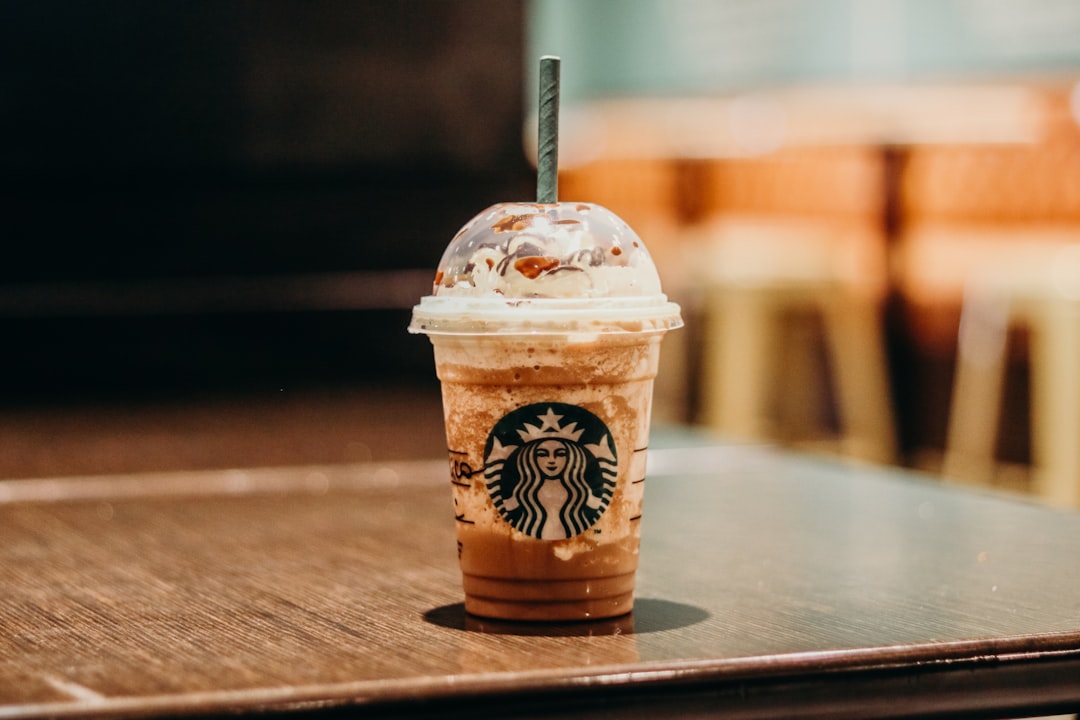
“We’re tracking down the Sharpies,” the newest CEO of Starbucks told CNBC last October, “and we’re going to get back to writing little notes on the cups.”
Brian Niccol, now a year into his tenure leading the coffee chain, wants to bring back a human touch to Starbucks. Adding handwritten messages to cups, a practice that was discontinued during the height of the pandemic, was an early step toward that goal.
But it’s already causing trouble for the company; recently a worker at a Chicago Starbucks location was accused of writing “Loser” on a customer’s cup. That customer reportedly ordered a Mint Majesty tea with two honeys, the favorite drink of Charlie Kirk, in tribute to the slain political activist. In a separate incident, a Starbucks employee refused to write Kirk’s name on a customer’s order, citing a company policy against writing political names on coffee cups.
After the Starbucks Sharpies turned political, the company issued a press release to clarify its position: Political slogans or “negative messages” aren’t allowed on cups; names including Charlie Kirk are allowed, and as it turns out, that Chicago barista didn’t write “loser” on a customer’s cup after all.
“We also know the markers we use to write on cups are accessible to anyone. And therefore, notes can be easily added to a cup by others after the drink has been handed off by our baristas,” the company said in its release. That’s probably what happened in the case of the widely publicized “loser” — but it took a digital solution (reviewing surveillance footage) to exonerate the Sharpie-wielding employee trying to do their job.
People, it turns out, are complicated. So is real-life hospitality that moves at the speed of coffee. Starbucks is now trying to get it all under control.
When Niccol took over at Starbucks, I didn’t expect a de-emphasis of technology.
Given his resume — running marketing at tech-savvy Taco Bell before becoming its CEO in 2015 and later his starring role reshaping Chipotle into a digital and drive-thru powerhouse — I expected to hear more about targeted tech for better service. I expected big changes at the drive-thru.
Instead, Niccol believes that turning stores into welcoming coffeehouses will cajole its guests to keep coming back.
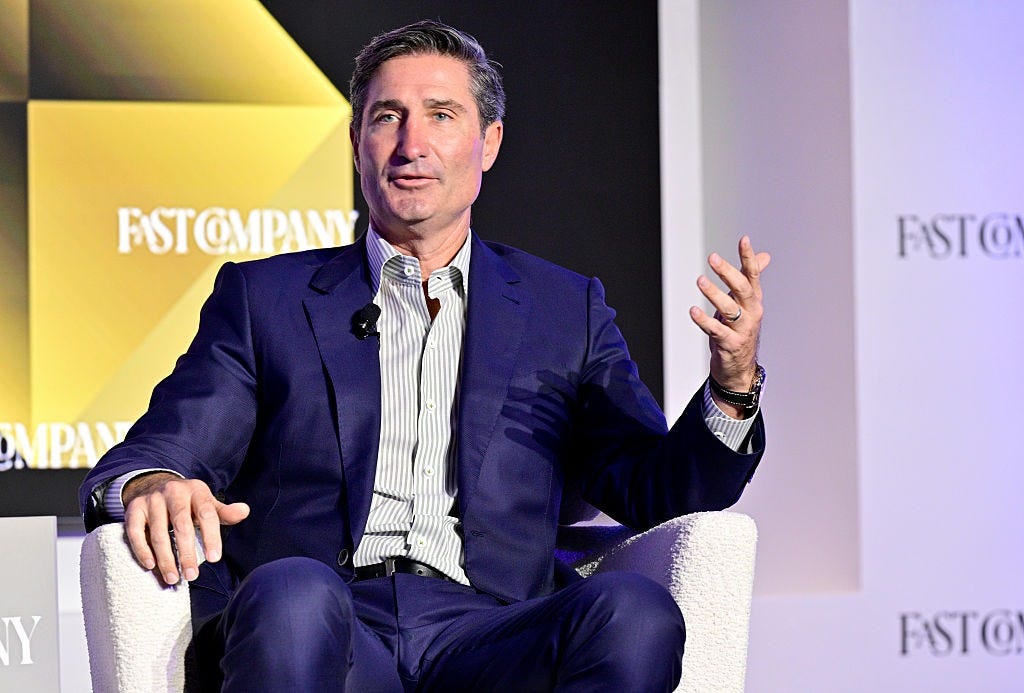
“I’m going to win more drive-through and mobile orders because of the coffee experience that you have every once in a while when you sit in our café,” he told Fast Company recently.
That experience, the Wall Street Journal reports, is carefully scripted. “The world’s largest coffee company is mounting a new effort to choreograph the way its hundreds of thousands of U.S. baristas speak, make drinks and hand off orders, down to the word,” journalist Heather Haddon writes.
Starbucks, like many other restaurants, has leaned on tech to help it create a standardized, predictable experience as it grows. No tech was off the table; in late 2022, Starbucks debuted a trendy NFT-powered loyalty program that felt cutting edge until NFTs tanked; it cancelled the program after about a year. It’s long promoted a mobile app that’s been considered best-of-breed for years. (I can’t count the number of pitches that have landed in my inbox promising “Starbucks-level technology for independent restaurants.”) The chain’s order-ahead feature has become too popular, with customers clogging stores in a kind of “ad hoc holding pen” (also reported in Fast Company) as they want for orders.
That familiar “holding pen” dynamic has become an expected side-effect of digital ordering at Starbucks and beyond, an inconvenient blip in the process of faceless ordering and limited human interaction. But Niccol’s now rejecting what he seems to characterize as a digital overstep. The chain will soon close all of its pickup-only locations, the first of which opened in 2019. Niccol doesn’t try to hide his disdain for the format, calling those stores “soulless vessels to just hand people coffee.”
Faceless is out! And faces are in.
So are chairs. Niccol has promised to add tens of thousands — or maybe hundreds of thousands — of chairs back into Starbucks stores. “When you walk into these places that are personal to you, there’s always a seat that you’re like, ‘That’s my seat,’ right?” Niccol said during a recent in-person interview. “Even if somebody’s sitting in it for the moment, you keep an eye on it.” [The room laughs nervously; who among us hasn’t circled like a vulture for a prime seat in a public space?]
Starbucks plans to serve its in-store drinks in ceramic mugs — Niccol is very excited about this — encouraging customers to linger. And they’ve added carafes of milk back to the in-store condiment bars so that people can customize their coffee without waiting for a behind-the-counter barista to get to it.
“We had to track down hundreds of thousands of these carafes,” he said. (They must’ve been hiding with the Sharpies.)
If an injection of hospitality is meant to turn Starbucks around, we’ll have to wait to see it.
In July, the chain reported its sixth straight quarter of same-store sales declines, but in a video release timed to the earnings report, Niccol promised the chain is gaining momentum. And while Starbucks’ leader isn’t touting technology as the biggest part of the turnaround, he is investing in it. After hiring former Yum Brands exec Meredith Sandland (who co-wrote two books about “the digital restaurant”) away from restaurant tech startup Empower Delivery, he decided to license the company’s technology and hire its engineers. Sandland, the first subject of this newsletter’s Women in Restaurant Tech column, is now Starbucks’ chief coffeehouse design and development officer.
Still, recreating the coffeehouse at scale in thousands of locations will be the biggest test of invisible tech yet, even as low-tech variables — like people — cause the biggest headaches.
“We are committed to creating a welcoming space where every customer can enjoy a great cup of coffee served by a friendly barista,” Starbucks said in that Charlie Kirk release. “And we hope our customers visit us with the same positive intent.”


Gotta say, I'm here for this.
Definitely something to be said about the "return to hospitality" focus - I hope it pays off the way he's thinking.
Though on that note, I was in Milan (shocked to see a Sbux there, but I digress) and the ceramic mugs were the go-to options, not takeaway. Yes that may be the culturally Italian thing to do, but it definitely created the IRL environment that the chain isn't really known for anymore.