


There’s a sweet story buried in this month’s glowing Fortune profile of DoorDash CEO Tony Xu and his $88 billion company that I’d never heard before. In the company’s early days, just 12 years but really a lifetime ago, a Stanford University football game nearly broke the company. DoorDash, which then served Palo Alto, California, was overwhelmed with postgame deliveries. Xu and his cofounders delivered orders late, and had to refund all of them, totaling 40 percent of their bank account.
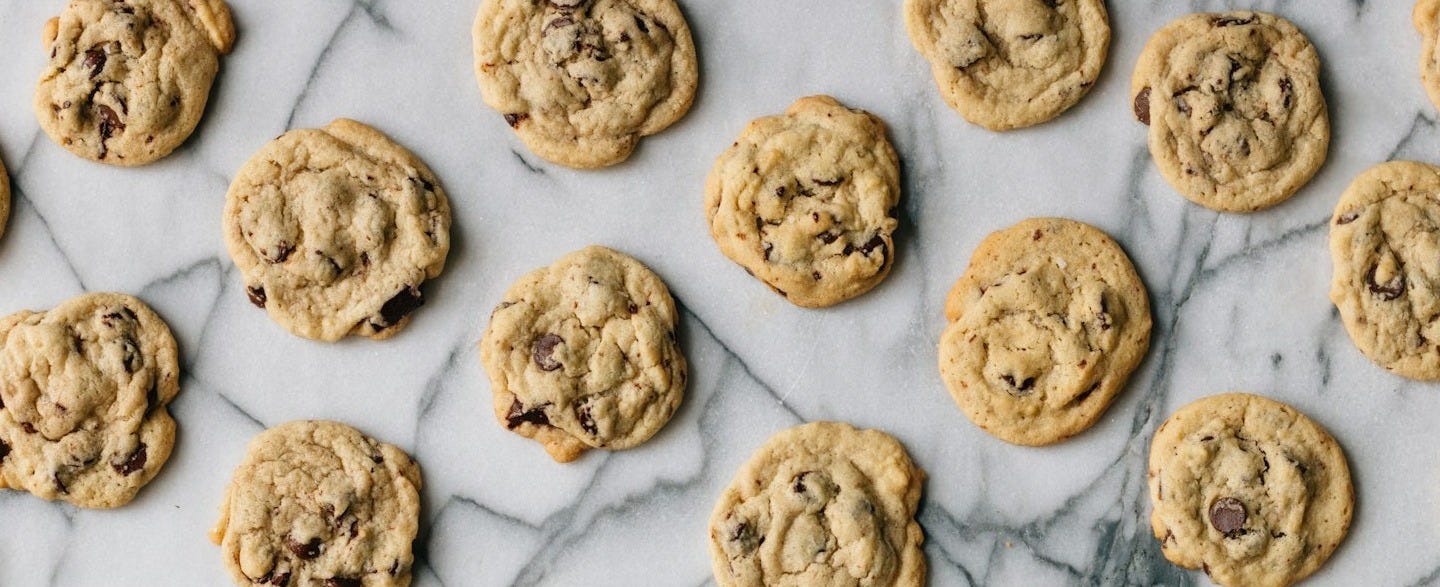
Unsatisfied with simple refunds, the co-founders, Xu along with Stanley Tang and Andy Fang, went home and baked cookies. The next day, per Fortune, they handed them out to those customers “as an added mea culpa.”
(Now we just call that Unreasonable Hospitality.)
There’s no way to know if homemade cookies were enough to placate hungry Stanford fans or turn them into eventual DoorDash power users. But it doesn’t matter! The company has been the undisputed delivery market leader for years.
—
In 2014(ish), DoorDash’s head of comms and the company’s chief operating officer called me into a windowless conference room in downtown San Francisco, pitching then promising me, a young journalist inventing a restaurant technology beat, that the company was absolutely poised to dominate delivery. I was… skeptical. But of course, DoorDash would go on to pass the then-giant Grubhub in market share about four years later, never looking back.
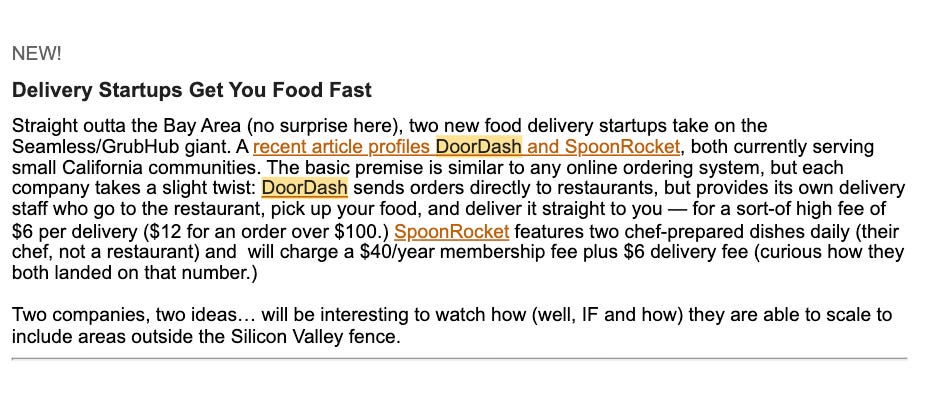
I’ve covered DoorDash for over a decade. It launched in 2013, at about the same time I started my first restaurant technology newsletter. While I’ve scrubbed most of those early newsletter editions from the internet, I saved a few for posterity. Here’s my first mention of the service that would go on to change the restaurant business:
—
DoorDash, obviously able to scale well beyond its Silicon Valley roots, is still founder-led. Stories like the mea-culpa cookies help humanize a corporate behemoth that has, for better or worse, changed how we experience restaurants and the broader world. The company (with a healthy assist from a global pandemic) has already succeeded in remaking the American economy and its workforce. In addition to all of the customer-facing success, DoorDash says that over the last five-ish years, about 1 in 15 adults in America have tried dashing — delivering — for the first time.
Fortune’s feature offers a solid-but-abbreviated history of DoorDash’s rise to prominence. The cookies may not have altered the company’s ultimate trajectory, but plenty of other decisions did. I’ve been thinking back to third-party delivery’s biggest moments; the good, the bad, the totally transformational. They include:
Restaurants added without permission:
While Grubhub and Seamless popularized online ordering, DoorDash’s logistics bet — taking responsibility for food delivery — changed the game.